

What is the bearing quality of retractable hose reels?
Oct 26, 2026
Leave a message
If you’ve ever used a retractable hose reel—whether for watering your backyard, airing up a bike, or powering a pneumatic tool—you’ve probably noticed the unsung hero that keeps the whole thing working smoothly: the bearings. Most folks don’t give these tiny metal parts a second thought until the reel sticks halfway in, spins awkwardly, or worse, snaps under the strain. As a supplier of retractable hose reels, I get asked all the time: “What’s the deal with bearing quality on these things? Is it just a small part that doesn’t matter, or does it make or break the reel’s lifespan?” Let’s break this down like we’re chatting over a workshop coffee, no jargon, just real-world stuff you can actually use.
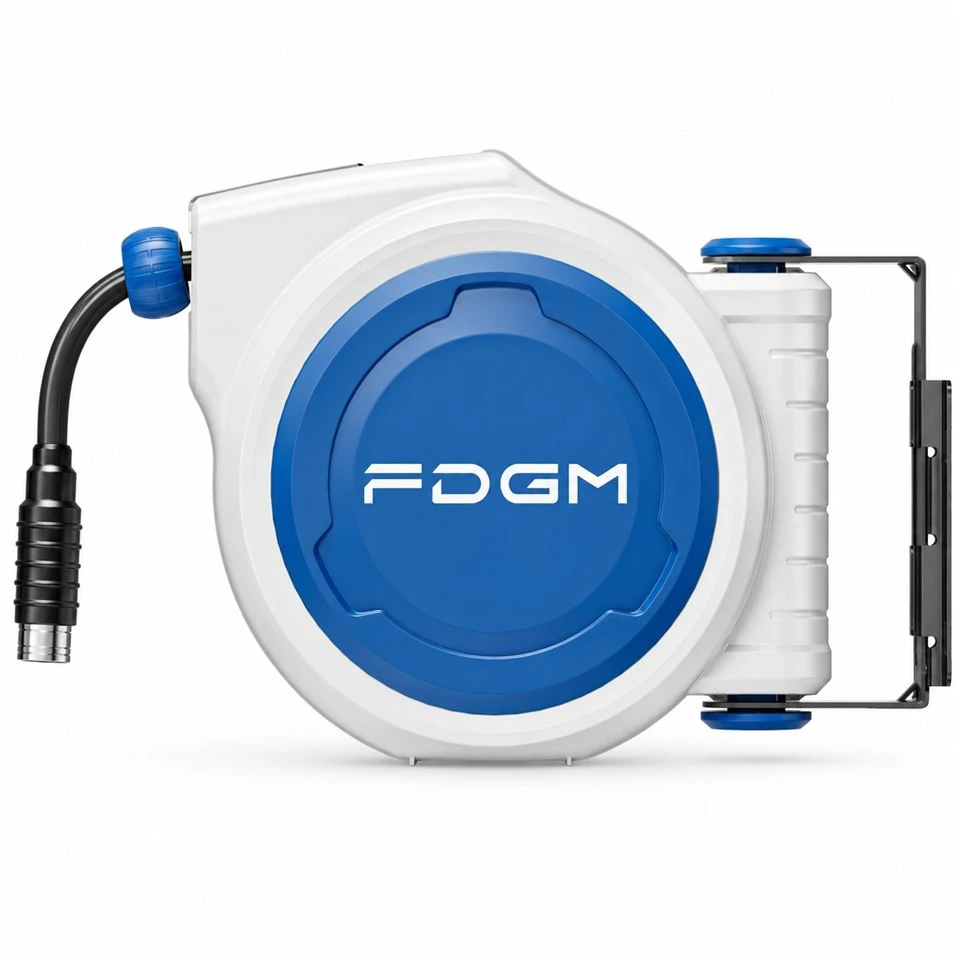

First off, let’s get clear on what bearings do in a retractable hose reel, because if you skip that, the quality question doesn’t land. Every retractable reel—whether it’s a water hose model for your garden, an air hose reel for your garage, or even a mobile cart-style reel—has a central axle that winds the hose back in when you release it. That axle isn’t just spinning on bare metal; it’s got bearings between the axle and the reel body to cut down friction, so the retraction is smooth, not gritty. The bearings also handle the load: when you pull a 50-foot garden hose tight, or push 100 PSI of air through a 30-foot air hose, the bearings take the brunt of that pressure, not the axle or the plastic body of the reel.
So, not all bearings are created equal. I’ve seen budget reels at big-box stores that use cheap, stamped metal bearings—think thin steel that rusts in a season, or loose tolerances that make the reel wobble. Those reels might work for a month, but by spring, they’re stuck half-unrolled, and you’re fishing the hose out with a pair of pliers. On the flip side, the reels we supply (and the ones I’d recommend to anyone who’s tired of replacing hose reels every year) use either precision ball bearings or sealed roller bearings, depending on the type of reel. Let’s tie this to actual products, because examples stick better than theory. If you’re shopping for a basic reel to keep your garden hose neat, take a look at our [Retractable Hose Reel without Hose]—we designed this with sealed precision ball bearings that are coated to resist rust, even if you leave it out in the rain all winter. No more wiping down the reel before use; these bearings are sealed to keep dirt and moisture out, which is half the battle when it comes to bearing failure.
Wait, but not all uses are the same. A garden hose reel is low-stress, but an air hose reel for a workshop? That’s a different game. If you run air tools daily—nail guns, impact wrenches, whatever—you’re yanking that air hose in and out a hundred times a week, and the air pressure adds extra torque to the reel. That’s why our [30+2m Wall Mounted Retractable Air Hose Reel With 180 Degree Swivel] uses sealed roller bearings instead of standard ball bearings. Roller bearings have a larger contact surface, so they handle higher loads without wearing out fast. We tested this model non-stop: pulling the hose in and out 10,000 times, pumping 150 PSI of air through it, and it still retracted like new. The swivel is another bonus, but the bearings are the reason it didn’t give out mid-test. On the smaller end of air reels, our [FDGM 10m Wall Mounted Retractable Air Hose Reel With 180 Degree Swivel] uses the same high-quality sealed bearings too, just scaled down for lighter-duty jobs—no need to overengineer a small reel, but we never cut corners on the bearings.
Another big factor in bearing quality is material. Like I said, cheap bearings use thin, low-grade steel that rusts in months. The bearings in our reels are made from chrome steel—hard, durable, and treated with a phosphate coating to resist corrosion. We tested this by submerging a reel in a bucket of water for 30 days straight, then running it through retraction cycles. The bearings had zero rust, no pitting, and the reel worked just like it did on day one. I’ve heard competitors brag about “weather-resistant” reels, but when you take the side panel off, you see open bearings that are just waiting for a drop of water or a speck of grass to jam them. That’s a cheap move, and it’s why their reels die fast.
What about mobile hose carts? A lot of people don’t realize that hose carts have bearings too—for the wheels, obviously, but also for the reel itself. Our [Ironton Garden Hose Reel Cart] isn’t just a wheeled base; the reel on top uses the same chrome steel sealed bearings as our wall-mounted models, so you can yank the hose tight while moving the cart across uneven grass without the reel sticking. We’ve had customers tell us they used a cheaper cart for a season, then upgraded to ours because they were sick of the wheel bearings wearing out so they couldn’t move the cart, and the reel itself grinding every time they used it. That’s the difference: bearings that are designed for both the load of the hose and the movement you’re putting on the reel.
Wait, let’s talk about how bearing quality affects you directly, not just as a supplier. When bearings are good, two things happen: first, the reel retracts smoothly every time. No more fighting to get that last 10 feet of hose back in, no more kinking because you’re yanking too hard. Second, the reel lasts longer. A cheap reel with bad bearings might go a year—maybe two if you’re gentle—while a reel with high-quality bearings? We’ve had customers use our water hose models for 5+ years, no bearing issues. Our [5/8 Retractable Hose Reel] (I see you asked about this one) is one of our most popular garden reels, and most complaints we get are from people trying to use it for a hose longer than 50 feet—never about the bearings. We built that for standard garden use, and the bearings hold up because we sized them right for the load of a 5/8-inch hose at full length.
I should also address a common myth: more bearings mean better quality. Nope. Some reels have extra bearings just to charge you more, but they’re the same cheap stuff. We stick to the number of bearings the reel needs to handle its specific load, no extras. The 5/8 water reel has two precision ball bearings, which is all it needs for a garden hose. The 30m air reel has four roller bearings and a sealed axle, because that’s what it takes for daily workshop use. Oversizing bearings doesn’t help, and undersizing them makes the reel fail fast. We’ve tested that too—when we first started, we tried using one less bearing on a small air reel, and within a month, the axle was warped because the bearing couldn’t handle the torque. So we adjusted, and now every reel’s bearing count and type is tailored to its intended use.
Another thing: seal type. Open bearings are fine for a chair wheel, but for a hose reel that’s outside or in a dusty garage? You need a rubber or nylon seal on both sides of the bearing to keep dirt, grass clippings, water, and oil out. Our sealed bearings do that—they’re completely enclosed, so only the axle and the inside of the bearing touch. No grit getting in to scratch the steel, no water seeping in to cause rust. I’ve had a customer bring in a competitor’s reel that was full of mud after mowing the lawn around it, and the bearings were so jammed they couldn’t turn the reel. That’s exactly why we use sealed bearings—they’re not a fancy add-on, they’re a necessity for real-world use.
Let’s wrap this up with the practical stuff you care about when buying a retractable hose reel. If you’re someone who just needs a reel for occasional garden watering, you don’t need a $200 commercial-grade reel. But you also don’t want to buy a $20 reel from the gas station that dies after a month. Look for these signs of good bearing quality: sealed bearings (not open), chrome steel construction, and bearings sized for the reel’s intended hose length and pressure. All the reels we supply—whether it’s the [Retractable Hose Reel without Hose] for custom hose lengths, the [30+2m Wall Mounted Retractable Air Hose Reel With 180 Degree Swivel] for workshop use, the mobile [Ironton Garden Hose Reel Cart] for large yards, the [5 8 Retractable Hose Reel] for standard gardens, or the small [FDGM 10m Wall Mounted Retractable Air Hose Reel With 180 Degree Swivel] for light tasks—use exactly the bearings I’ve been talking about: sealed chrome steel, sized and designed to handle the load, no corners cut.
At the end of the day, bearing quality isn’t a “nice to have” for retractable hose reels—it’s the core of how well the reel works, and how long it lasts. As someone who’s been in the hose reel game for years, I’ve seen too many customers waste money on cheap reels that die fast, just because they didn’t notice the bearings were trash. If you’re in the market for a new hose reel—whether for your home, your garage, or your workshop—don’t just look at the price or the hose length. Ask about the bearings. And if you want to chat more about which reel is right for your needs, feel free to reach out to our team to talk through your specific use case.
References:
- American Society of Mechanical Engineers. (2020). Design Guidelines for Rolling Element Bearings in Industrial Equipment. ASME Press.
- Hose Reel Industry Performance Standards. (2021). Outdoor Power Equipment Institute (OPEI).
- Material Corrosion Resistance Testing. (2022). National Association of Corrosion Engineers (NACE) International.